
Infertility
This episode centers on a guest’s personal infertility journey: a two-and-a-half-year IVF process, shared closely with a friend, that included a 34-week pregnancy ending in an emergency C-section. The guest, referred to as Marlin, discusses the financial and emotional weight of IVF, noting she stopped counting costs after $65,000.
Drs. Williams and Guthrie add clinical context throughout, including that infertility isn’t only a female issue: they discuss male-factor infertility causes and treatments alongside female-focused options like IVF and embryo transfer timing.
The episode closes on a hopeful but honest note, acknowledging that when a pregnancy doesn’t happen or has a difficult outcome, the journey toward parenthood doesn’t necessarily stop there. Strong internal-link candidate for Page 21 (Fertility Evaluation & Laparoscopic Infertility Treatment).
Transcript:
“Dr. Mironda Williams: Welcome to Take Good Care podcast, an endeavor that grew out of our love for obstetrics and gynecology. Our aim and mission, is to serve as a source of vital information for women of all races, ages, and walks in life. I am Dr. Mironda Williams.
Dr. Deanna Guthrie: I’m Dr. Deanna Guthrie.
Dr. Karen Greene: And I’m Dr. Karen Greene.
All: Welcome to our show.
Dr. Mironda Williams: Welcome to another episode of Take Good Care podcast. I’m Dr. Mironda Williams.
Dr. Deanna Guthrie: I’m Dr. Deanna Guthrie.
Dr. Karen Greene: And I am Dr. Karen Greene.
Dr. Mironda Williams: We are continuing with the series that we’re calling Life Lessons with Take Good Care podcast, where we have had amazing guests with us virtually, as well as in person here in the studio. And so we have another wonderful guest that we’ll be introducing to you shortly. But before I do anything, let me remind us all that we are live and on the air. What we have tried to do with this podcast, is create a space, an extension really, of the safe space that we try to create in the office with our patients, to encourage conversations on a wide range of topics. We try to go there, whether it’s political, social, personal. And so this is just another in those creative spaces that we would like to do to encourage us all to kind of really stay in touch with ourselves.
So before we get started, I will just put a little disclaimer out that this may be triggering, this topic may be triggering for some people. We’re going to be talking about fertility, infertility, the journey with that, and how we get to that point, from a very personal perspective from our guests today. But we feel it’s important to provide an opportunity for us to check in with ourselves, and check in with those who really have had a personal experience, so they can share some wisdom with us, as we try to care for patients, and then for our patients, and those who are in our audience. So Dr. Guthrie is going to introduce our wonderful guests that we have connected through our partner Dr. Greene, and she’ll talk about that in just a bit.
Dr. Deanna Guthrie: Thank you, Dr. Williams. Well, Marlynn Jones, like many women, she once believed that she had all the time in the world to build a career before starting her family. But life, as we know, it has a way of changing our perspective a lot of times, and it made her realize how precious time is. She was sitting in the front row of her mother’s funeral, at age 38, and she knew if something happened to her, that her front row would be empty.
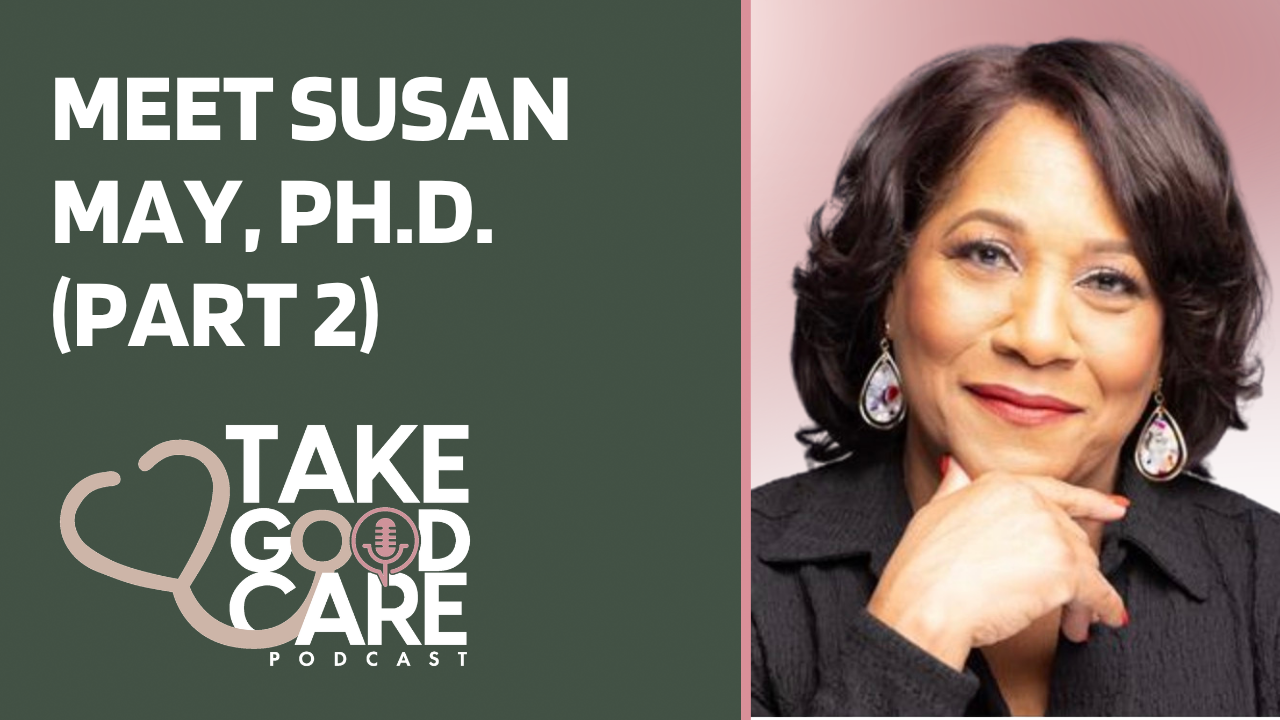
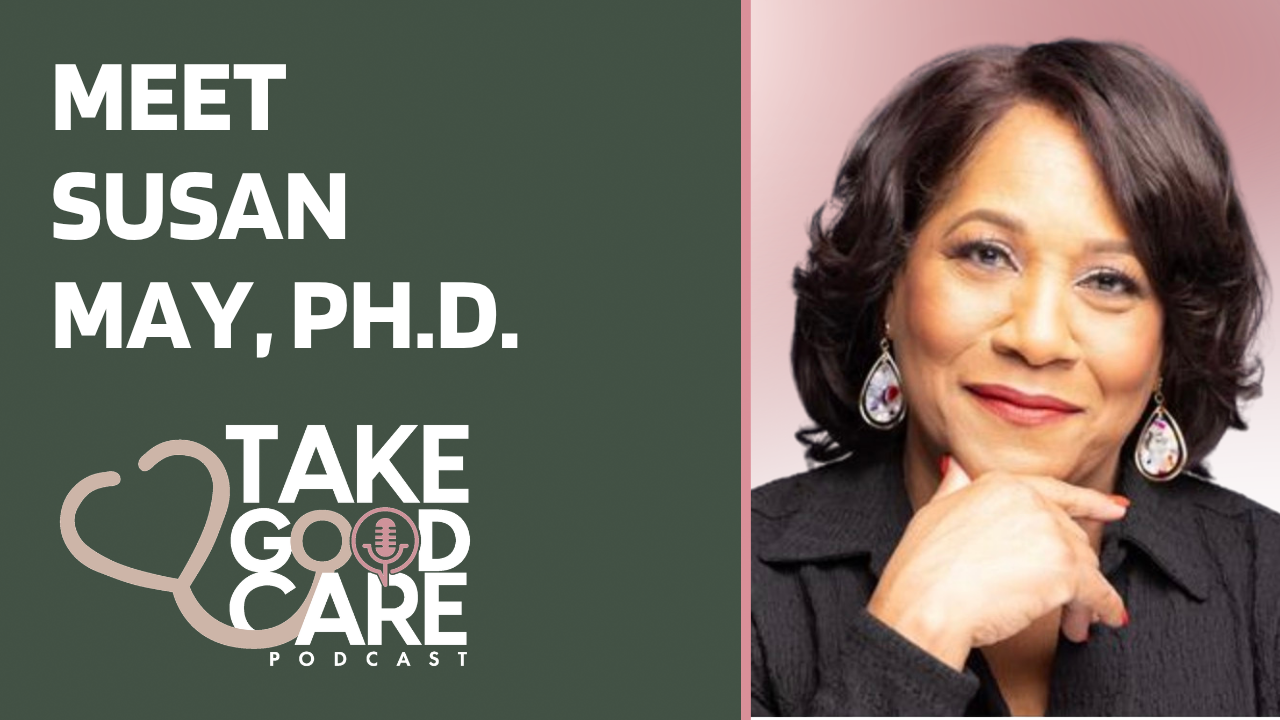
Marlin then went out on a long and difficult journey to create a family, including a two and a half-year IVF journey that she shared with a close friend, and a 34-week pregnancy that ended in an emergency C-section. In vitro fertilization, IVF, is an expensive endeavor, and Marlin stopped counting after spending $65,000. She faced many disappointments and heartaches, but for those who were watching on our YouTube, or video channels, as you can see by her photo, she was able to smile again. Marlin’s story is a reminder that time is not a luxury when it comes to starting a family.
If you wait for the perfect moment, that perfect moment may never come. Marlin’s journey was difficult, but it was worth it. She now has a beautiful family, and a front row that will never be empty. In this podcast, Marlin will share her infertility journey, and how she was able to create her current family. It is an inspiring story, and we hope it encourages all to act, if you do want to start a family. You can’t wait for the perfect moment to create it. Now Dr. Greene has a personal connection with her, so I want Dr. Greene to share that with us now.
Dr. Karen Greene: Thank you. Dr. Guthrie. I have known Marlin Ruth Jones.
Dr. Mironda Williams: Oh, you got the whole name?
Dr. Karen Greene: Yes.
Dr. Mironda Williams: That’s how much you know her.
Dr. Karen Greene: Yes. I have known her since I was a freshman in college. She is a good friend of my dean of pledges, and so I saw Marlin around all the time. Marlin was just there. And I remember when I got to my sophomore year, I kind of wondered, “Well, where is this other AKA?” Marlin’s, a Delta. We don’t hold that against her.
Dr. Mironda Williams: Wow. I didn’t know that until this moment. But it’s okay.
Dr. Karen Greene: We don’t hold that against her, but it’s all fine in the Divine Nine.
Dr. Mironda Williams: That’s right.
Dr. Karen Greene: But on the serious side, we became close, probably when I spent a summer in Durham, North Carolina, which is where she’s from. And got to know her mom and her dad, and they would invite me over for dinner, and I love the vegetables, Marlin doesn’t eat vegetables.
Dr. Mironda Williams: What?
Dr. Karen Greene: And so she ate all the wonderful meat, and I would eat all the vegetables.
Marlynn Ruth Jones: Meat-atarian.
Dr. Karen Greene: Exactly, exactly. She has the meat and a Pop-Tart, that’s what it was. So our paths continued to cross. As I left Durham, I ended up in Atlanta. Marlin was in Atlanta, and Marlin is one of those people that kind of knows everybody. If you meet somebody and you mention her name, she might actually know them. And I don’t care where it is because she-
Dr. Mironda Williams: She’s Kevin Bacon, she’s six degrees to Marlin.
Dr. Karen Greene: Yes, exactly. That’s what it is. That’s what it is. And so when I discovered that she had decided she was going to become a single mom, it didn’t surprise me, because anything she’s ever done and set her mind to it, she’s been successful at, and so that decision didn’t really surprise me. But then having to watch her go through, to get to the point that she is at now, was different for me, because at that point, I was a physician. I had treated people with infertility, and looked at it from that perspective. And seeing the personal side of it, it breaks your heart. It definitely, it breaks your heart watching what a friend goes through. And a strong friend, not someone that takes anything from anybody, has always been kind of at the top of her game.
And so just watching her go through that, and then finally having success, it’s always just warmed my heart. When we are doing our podcast and we were looking for some change, Marlin had a podcast. She’s the career skills architect because she knows a lot about a lot of different careers, and she can coach you on what to do and what not to do, because she has been successful in many different arenas. And she had a podcast. And so I listened to it a couple of times, and I said, “Wait a second, Marlin, who do you use for your podcast?” So of course she connected us with Eldridge Media, and here we are.
Dr. Mironda Williams: Yes.
Dr. Karen Greene: And when we made that connection, she said, “Well, maybe I’ll come on your show and talk about my fertility journey.” And I said, “Really?” And she said, “Yeah.” And I was so happy that she said that, and when we finally got to the point where we could have some guests virtually, she was of course, the first person I thought of, because I really wanted to get that personal side, to understand. Because I think, especially when I was in training and even as a physician, fertility was one of those things I said, “I’m not dealing with those people,” because what they go through, they’re a little crazy.
Dr. Mironda Williams: A little intense, yeah.
Dr. Karen Greene: And it’s very intense, but I understand a little bit more. And I think that Marlin can shed light on what it takes to do that, and what you go through. I even said to her, “Is there anything that we can’t talk about?” And because she didn’t respond as yay or nay, and because she gave us that wonderful introduction, I think that it’s important for other people to understand that too, that it is something that can be difficult to go through, but the result is worth it in the end.
Dr. Mironda Williams: That’s wonderful, Karen. So Marlin, first of all, thank you for your connection, and your agreement to be with us, and for just Eldridge Media that’s taken us to the next level, so we’re excited about that.
Marlynn Ruth Jones: Eldridge is wonderful. And so it’s Keith.
Dr. Mironda Williams: Yes. We love our guys. Yes, we love our guys. So let our audience know, just where would you like to start in terms of talking about your journey?
Marlynn Ruth Jones: Sure. And I’d like to say right now, my eyes are teary, not because of the subject, but I am in Orlando, Florida with flowering trees, and I forgot my allergy medicine, and so my eyes are going crazy, and so I apologize for that. I started, my mother passed in 2001, so I’m well beyond the early trigger states of this.
I was one of those people who saw the movie stars and the people on TV having these children at 48, 50, and listening to the male doctors who said, “You can have a baby whenever, it doesn’t matter. Just wait, wait, wait.” And not having any type of medical background at all, I believed them. And after my mom passed, that I went to see my fertility doctor in South Carolina at my first appointment, and I was about 39. I was telling her, “You know, in a couple of years, I want to think about having a baby,” and she laughed at me. She just broke out laughing, and I’m looking at her, and she was like, “Okay, so if you want to have a baby, you’re going to have one now.”
I was like, “Oh, no, not now.” All these people on TV having babies and stuff, because there wasn’t social media and all of that, so you saw people on the Inquirer or People Magazine. She said, “Well, first they’re not using their own eggs.” She said, “You’re not going to have a good outcome with some 40-year-old eggs,” that’s number one. What they’re not telling you is they’re using IVF to have children, and they’re having stepchildren because they’re using other people’s eggs.
So that was just amazing for me. Of course, there was no Google or internet, or WebMD to go to and get information. So you still have to go to the library and look up things, and listen to the medical professionals. And she said, “If someone is having a baby in their late-40s, it’s not their first baby. They’ve had one before, and so their body knows what to do.” So the first thing we had to do was go through a lot of tests, and when I lived in Atlanta during the Olympics, I remembered speaking to an OBGYN who said, “I think you may have some issues with your tubes, but if you’re not ready to have a child right now, we don’t need to look into it.” So I was like, “Cool, we’ll just look into it later.”
So we went through a bunch of different tests and, excuse me, I had two separate issues. One were that the tubes were blocked. The second issue was that my immune system was so high, that it killed anything that it saw as foreign, including anything it thought might be trying to grow as a child, so it would attack and kill it. So in addition to the IVF, I had to agree to when I would become pregnant, going through a procedure, I forgot exactly what they called it. But I had to have blood infusions, where they used the blood of 10,000 different people that they mixed together, and a nurse would come and administer the blood to me once a month. And then I would have to get blood drawn at a lab, send it off to the specialist in Chicago for her to check and make sure that my blood levels were doing what they were supposed to do, and my body wouldn’t attack the growing fetus.
Dr. Karen Greene: Wow.
Marlynn Ruth Jones: So when you said, I went through the cycle with a friend, I had another girlfriend who was having issues at the same time. And she was going through treatments in Maryland, and I was going through treatments in South Carolina, so we had each other as a sounding board as we would go through all of the shots. And I’m afraid of needles, so that’s the other part of this that was really crazy.
Dr. Karen Greene: Do you think that was-
Marlynn Ruth Jones: Because then it was like, “Well, you’re going to have to give yourself these shots.” “I’m going to have to do what?” And that lets you know when you want to have a child, you are willing to do all kinds of things that you never thought you could do, including give yourself shots in your stomach and your thighs, more than once a day for 30-some weeks.
Dr. Karen Greene: Do you think it was helpful, I guess, having someone to talk to through all this, in terms of-
Marlynn Ruth Jones: It was. It definitely was. Because her husband was just oblivious, he wasn’t really able to talk to her. He wasn’t able to express his feelings and emotions, so she and I were able to talk to each other. And her mother was living with her, so I was also able to talk with her mother since my mother was gone, so all of that was helpful.
Dr. Deanna Guthrie: Besides her, who was your support, since Karen mentioned you-
Marlynn Ruth Jones: I’m sorry?
Dr. Deanna Guthrie: Besides your friend who was going through the same treatments but in a different state, who was your support to go with you to doctor’s appointments and things like that? Did you have anyone like that?
Marlynn Ruth Jones: No, no. I was in South Carolina. I was new to South Carolina, and it was really crazy, because during those first sessions, you have to be at home at a specific time. So I’m working in athletics at University of South Carolina, with a huge athletic department, and so I’m having to make sure that I’m at home at 6:00 to do this, that, and the other. And we’re having all these different programs, it’s the wintertime and it’s cold, but I was hot because of all those hormones. So we’re going to functions, and I’m like, “God, it’s hot in here,” and I’m taking off my jacket, my coat, and people looking at me like, “What is wrong with this woman? It’s winter time.” But I was always hot, always hot, and to know it’s just looking like a crazy person over in the corner.
Dr. Karen Greene: It’s interesting that you talk about how you had to do this and work at the same time. What are your thoughts now, on just being a woman having to go through this with a male-dominated field that you were in, talking about athletics, in terms of what do you disclose and what don’t you disclose? Do you just hide it, or do you just kind of be all open and let them deal with it?
Marlynn Ruth Jones: With athletics, it’s still very male-dominated, and unfortunately, the less they know, the better. Because they already don’t believe that you can do the job. And so giving them more ammunition and reasons that, “Oh, well, she’s going to have to leave and go to this meeting, and she’s going to have to leave and go get this shot.” And they don’t understand infertility until it’s them that’s infertile anyway, so yeah, I still wouldn’t suggest it.
Dr. Mironda Williams: Yeah. Thank you. Hearing this perspective is exactly what I’d hoped, because as physicians, and we all trained during the same era, and hearing what you said, that’s pretty much how we were trained, which is until you’re ready to really try to be pregnant, there’s no reason to investigate, there’s no reason to do anything. And then because women have been delaying childbearing for a number of reasons, whether it’s professional, personal, whatever it is, then when you’re finally at the point where you want to begin your family, and you start to investigate, you’re like, “Wait a second, I’ve got a tubal issue.” Well, we kind of thought so 10 years ago, we were like, “Ah, no reason to do anything,” because that’s how we were trained.
But now, I think there have been so many advances in terms of the technologies and things that are available for the assisted reproduction, which is what IVF falls into, in vitro fertilization, as Dr. Guthrie mentioned. And for this, we’ve talked about fertility and some other things in some previous shows and podcasts, but we really want to keep this more personal. But Dr. Guthrie, I think you do have just a little clinical information, just to let the audience know when we talk about assisted reproduction, or in IVF, in vitro, what are we talking about?
Dr. Deanna Guthrie: So like I said, with infertility, there are multiple reasons why a couple can have difficulty getting pregnant. There’s never just one reason, and there’s not one fertility test that you do, and then, poof, you find out if you’re fertile or not.
What people don’t realize, it’s an equal chance that it’s a male and female problem. So 40% of the time, it’s a female problem, 40% of the time it’s a male problem. And then about 20% of the time, every test could be run, every test will come back normal, but for some reason, the couple, or that individual trying to get pregnant, will have difficulty getting pregnant. So those people need help. Help can range anywhere from just taking hormones, so it could be an ovulation issue where they give you medication to now help you ovulate, which now makes it easier for you to get pregnant.
Dr. Mironda Williams: And usually, that’s an oral medicine.
Dr. Deanna Guthrie: That’s usually an oral medication. Though, when you get to in vitro fertilization, now they become injections. There could be a problem for the woman, where the sperm can’t get to the egg, there’s difficulty getting through the mucus from a woman’s uterus. So there’s a procedure called IUI, intrauterine insemination. So instead of the couple being intimate together, they pick the best time for women when she would get pregnant around ovulation time, and then actually inject the semen, the sperm into her uterus, to then help the sperm get past the roadblock, is the best way to describe it, to then help them get pregnant. You have where, as in Marlin’s case here, her tubes were blocked. You can have surgery to try to unblock the tubes, that’s another way to help. So all these are ways to assist couples getting pregnant
All the way up to the big daddy of them all is in vitro fertilization, where the egg and the-
Dr. Mironda Williams: Or big mama.
Dr. Deanna Guthrie: Big mama, there you go. The egg and the sperm are put together, and you have conception outside of the body, and it forms an embryo. And then they actually, then at the fertile time of a woman’s month, and she gets injections to get everything ready, it’s getting her lining ready.
Dr. Mironda Williams: This is all about the timing.
Dr. Deanna Guthrie: It’s all about the timing. They put the embryos inside the uterus, and then hope that the pregnancy takes that way, so those are kind of different ways. On a male side, see, I was trying to ignore a male again. Men can have medical conditions, anywhere from where they don’t make sperm at all, to where they have cysts in their reproductive systems that have to be removed. They may need hormones themselves. Not only women have hormone problems, men.
Dr. Mironda Williams: Fellas.
Dr. Deanna Guthrie: So sometimes men need testosterone injections. So there are multiple different ways that couples can be aided to get pregnant.
Dr. Mironda Williams: But to her point, Marlin, as you described, very often, the treatments, when you get to the point of the in vitro fertilization, you’re having to give yourself injections. You’re having to give yourself multiple injections. You’re having to give yourself multiple injections over multiple days, over multiple cycles. Because unfortunately-
Marlynn Ruth Jones: At specific times of day.
Dr. Mironda Williams: Of day. And so for women who are working, or whatever else you have going on, whether there’s other family responsibilities, that just can be beyond challenging.
Dr. Karen Greene: Absolutely.
Dr. Mironda Williams: Can you talk a little bit more about how that impacted you, just in terms of trying to juggle everything and keep the timing so that you would end up with your beautiful, beautiful family?
Marlynn Ruth Jones: Well, again, when your goal is to try and have a child, I think it’s more tunnel vision. So if I have to be home at 6:00, I’m going to make sure that I’m home somewhere between 5:55 and 6:02, and I’m going to be there. going to
Dr. Mironda Williams: Just going to make it happen.
Marlynn Ruth Jones: Regardless of what the reason is I have to have to leave work. Now with athletics, we work basically a 24-hour day, so I can go home and go back. With women who have other careers, I don’t know how much flexibility they have. If you’re doing surgery, I don’t know that you really have as much control over what time of day you could schedule it.
Dr. Karen Greene: Right, and I think that, as we talked about, when we make this decision to delay our childbearing, we don’t really think about that.
Dr. Mironda Williams: Those things.
Dr. Karen Greene: We don’t think about those things. What I’ll be doing if I have to do A, B, and C, because we make the assumption it’s going to be fine, everything’s going to be fine, everything’s going to work,
Marlynn Ruth Jones: Everything’s going to work out. Because we’ve been told that reproduction is something that’s just natural, and it just happens. And it wasn’t until I was actually trying to have a child, that I noticed everywhere I go, whether it’s the mall, the grocery store, I saw pregnant people, pregnant people, pregnant people everywhere. And I see pregnant teenagers, and I see pregnant crackheads, and it’s like, “Why are they able to get pregnant and I can’t?” And then you internalize it as there’s something wrong with me. There’s some reason that, divinely, I can’t have a child. You internalize it as an indictment on yourself, as to why you can’t have a child and other women can. We don’t look at it as a medical issue. We internalize it more as a personal issue.
Dr. Mironda Williams: That’s good. How did you work through that? How did you work through some of that internalization?
Marlynn Ruth Jones: I mean, my journey was just God-awful. The very first process, the guy I was seeing, the day that we were going get ready to do the transfers, he went, he gave the sperm, he signed the papers, he left. I’m on my way to go for them to insert the sperm, he calls back and revokes their ability to use the sperm.
Dr. Karen Greene: Oh, my goodness.
Marlynn Ruth Jones: They call me, and say, “Yeah, he just changed his mind and said, we can’t use the sperm.” I’m completely hysterical.
Dr. Deanna Guthrie: Because that’s a lost month. That’s a lost month of inject… So it’s not something that you can just reschedule next week.
Marlynn Ruth Jones: No, it don’t. So they’re trying to explain to me how I can go through this catalog and pick sperm, and they can get some there by the next day. And I can’t even-
Dr. Karen Greene: Can’t even process that.
Marlynn Ruth Jones: Or process any of that, because I’m just hysterical. The next time I was trying to go through a cycle, I had a very good friend who had come up from Florida, and they told him that his sperm count was too low, that they doubt that he could ever produce children without medical help. And found out that actually, that journey was more about him than about me, because he was in a professional school setting with a girlfriend who was trying to manipulate him, and had just told him that she was pregnant.
Dr. Mironda Williams: Well, really? Wowzers, that’s another show.
Dr. Deanna Guthrie: Yes.
Marlynn Ruth Jones: That’s exactly what I said. So that’s why I said, sometimes your journey’s not always about you, but it’s for somebody else. Then yeah, finally got to a point where we were doing a cycle with donor X, donor sperm, and just when I was cleaning out my garage over the weekend, I found the pictures with the embryo and how they split and all, but they just didn’t attach. I said, “I’ve got one more try left in me. One more,” that was in the 2005. I had just moved to Tallahassee, Florida, still using my doctor in South Carolina. My father passed in January, right after Martin Luther King weekend, and I was scheduled for the treatment the very next week in South Carolina. I said, “Well, I’m already here in North Carolina, I guess I might as well go.”
I had a friend drive me down to South Carolina, had the treatment, drove back to his house, and I just laid there until it was time for the flight two days later. And that’s the cycle where I got pregnant. And I was actually in Maryland for a track meet on my way to my girlfriend’s house who was pregnant. She had gotten pregnant with her cycle. When the lady called me at the hotel, to tell me that my pregnancy test came back positive. So now I really am hysterical because what am I supposed to do?
Dr. Karen Greene: Now that I’m pregnant?
Marlynn Ruth Jones: I’m in Maryland, I’m at a track meet. I’m working a new job. I’ve only been on the job since December.
Dr. Mironda Williams: Oh, my goodness.
Marlynn Ruth Jones: My dad just died. Did God and my dad just send me this baby so that I can get through this? Okay, but I’m high risk, so I’m not going to get excited. They said, “You got to get through 32 weeks.” Okay, so I’m not going to get excited until 32 weeks. So the twins were all over the planet, they were excited. Some reason I was in Durham for something that Taylor had, and the twins had connected it to also give me baby gifts at the same time.And I was like, “No, it’s too early. I can’t have gifts yet. I can’t have gifts.”
So took the gifts back to Florida, got to week 32. Okay, now I can get excited. I can get excited. I started buying stuff, putting things together. Week 34, that morning, so I was going to a specialist in between for him, the way he weighed the baby every month, looked at her. Left work at lunchtime to go for him to check the baby, and what you never want to see happen after he looks at her, he goes in the office. You know all those books y’all have on your shelves, those big, big books that you never use?
Dr. Mironda Williams: Yes.
Marlynn Ruth Jones: He went in the office, got one of them off the shelf and opened it. And so I’m like, “What’s that about?” And then he comes in, and then he goes back and he gets the book out again. And then he says, “You have to go to the hospital right now. You’re going to have to deliver today. We’ve just got to figure out if you’re going to deliver here in Tallahassee, or if we are going to send you to Gainesville where they have a specialty clinic.” And I’m like, “What in the world is going on?” And he said “The baby was bleeding from her brain, and so she had to be delivered by emergency C-section.”
And I’m like, “How can she bleed from her brain?” And of course, he was explaining it to me. Everything he said from then on, was Charlie Brown’s teacher, [inaudible 00:29:36]. I have no idea what he said after that, other than I had to get to the hospital. I went to the hospital where I had been going, because I kept getting dehydrated and doing excessive vomiting, vomiting, vomiting, and I’d have to go and get IV fluids. So I went to that hospital where my doctor worked, but they didn’t deliver before 36 weeks. And I was at 34 weeks, so they had to put me in the ambulance to send me to the other hospital where my doctor couldn’t deliver, so my doctor had to find a friend-
Dr. Karen Greene: Oh, my goodness.
Marlynn Ruth Jones: Who could meet me at the hospital and deliver me. And I’m just by myself going, “What in the world is going on?” And I’m also trying to get on the phone and call Blue Cross Blue Shield because they say you have to notify them if you’re going to deliver before 36 weeks. And the nurse is like, “We ain’t got time to do that right now. You got to get off the phone.”
Dr. Mironda Williams: Get the baby out, and we’ll figure that out later.
Marlynn Ruth Jones: We’ll figure that out later. So we get to the hospital, I remember… I mean, they’re doing that. They’re like, “We got to get a catheter, we got to get an IV.” I’m just, again, it’s Charlie Brown’s teacher. I see the clock, it’s 7:00. They wheel me in. This is the first operation operation I’ve ever had other than oral surgery. I didn’t know an operating room was empty, because on TV, you got all this stuff in there.
Dr. Karen Greene: Everybody, all the things.
Marlynn Ruth Jones: So I’m like, “This is an empty room. Why y’all putting me in an empty room?” But then they tell you to count back from 100, and at about 95, I don’t remember nothing else. I wake up, and instead of the clock saying 7:00, it says 10:00. Doctor comes in, he explains everything that happened to me. Don’t know the conversation. They roll me to where the baby is. They let me see her. They said they gave her three blood transfusions so she can stay alive for me to meet her, and I get to hold her. And that’s when she passed away.
I went to University of North Carolina, whose colors are Carolina blue and white. My favorite color has always been purple. I grew up in the Episcopal church, which is very close to the Catholic church. When they bring the baby to me, she has on a Carolina blue dress with a white cap and a purple rosary. And so they got a priest to come and baptize her for me. And then my brother, I didn’t know, right before I went into the hospital, I was able to call my best friend at home. And I said, “They sent me over here and they said, I’m getting ready to have a baby and I don’t know what to do.” And she said, “I’ve got to call your brother because you don’t have any family in Tallahassee, and he might have to make some kind of medical decision.”
So she called him. He had just lost his job the day before, so he was able to come to Tallahassee to be with me. I tell people I always believed in God, but going through this experience showed me that he was real, and that he has orchestrated things in advance for us.
Dr. Karen Greene: That you never know.
Marlynn Ruth Jones: That you never know.
Dr. Karen Greene: Wow.
Marlynn Ruth Jones: Before I’m leaving the hospital, I lived in a townhouse. They’re telling me I can’t walk upstairs, so my brother has to get all of the stuff and bring it downstairs. And then he takes me back to our home in North Carolina, that’s a ranch. Where my neighbor, who lives directly across the street from me, had three daughters, and her middle daughter had passed away. I had to walk every day for the C-section, and she would come out and walk with me and talk about how she was able to move on after her child passed.
Dr. Mironda Williams: Man, wow. Wow.
Marlynn Ruth Jones: Yeah.
Dr. Deanna Guthrie: And tell us the name of your first, your daughter. Your daughter. What was her name?
Marlynn Ruth Jones: Cameron Nicole, yeah. My favorite aunt growing up was Arlene, Cameron was her last name. And my father’s middle name was Nicholas, so I did Cameron Nicole.
Dr. Deanna Guthrie: Oh, that’s nice.
Dr. Karen Greene: Beautiful.
Marlynn Ruth Jones: And the same woman that walked with me each day, I grew up with her children. My adoption attorney ended up being her daughter’s adoption attorney when she couldn’t have a child through IVF.
Dr. Mironda Williams: Wow. Wow, full circle. How much of that do you recall Karen? And you talked about how going through this with Marlin from her perspective, shifted, or was different than from a clinical physician’s perspective?
Dr. Karen Greene: It was just so… I remember when she said, “I can’t get happy.” And I was like, I was on pins and needles too, because I’m thinking the same thing. Okay, if she just gets to this point, she just gets to this point, just gets to this point-
Dr. Mironda Williams: All the milestones, if you get to, yeah.
Dr. Karen Greene: And then to have it end up in a neonatal demise, and the baby dies, that was just emotionally devastating. And you always say you don’t know what to say, and I didn’t. And I couldn’t be there, that was the one thing I was like, “I wish I could have been there,” because I didn’t have any words at all. There was nothing, Dr. Richard would come out, there was nothing that I could even think of to say. And for me, it was just, I had to pray that at some point, there’s got to be a reason for all this. But why? Why? Why did she have to go through all of this? The person not showing up, the person with the low sperm count.
As you were telling it, I remember all those feelings, thinking, “This is just not f”
Produced by Just Eldredge Media
Stories like this one are a reminder that an infertility diagnosis isn’t the end of the road. Our Fertility Evaluation page covers what a workup looks like and the treatment paths available from there.