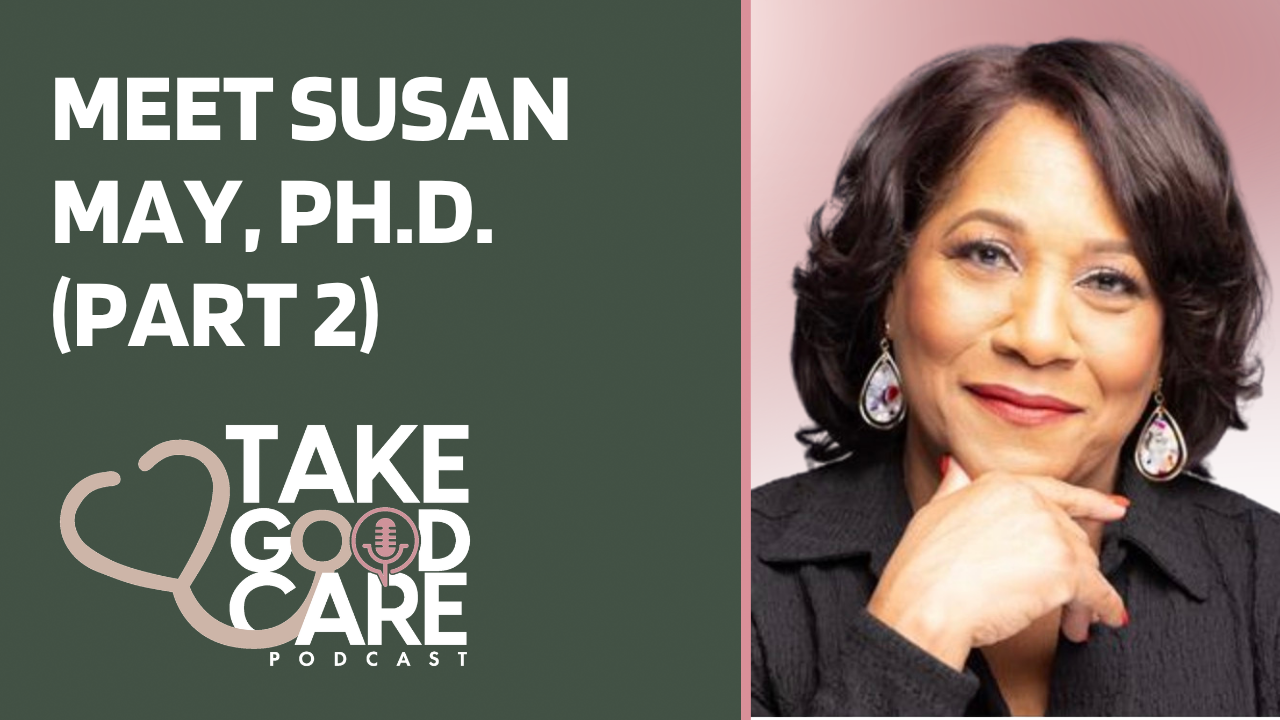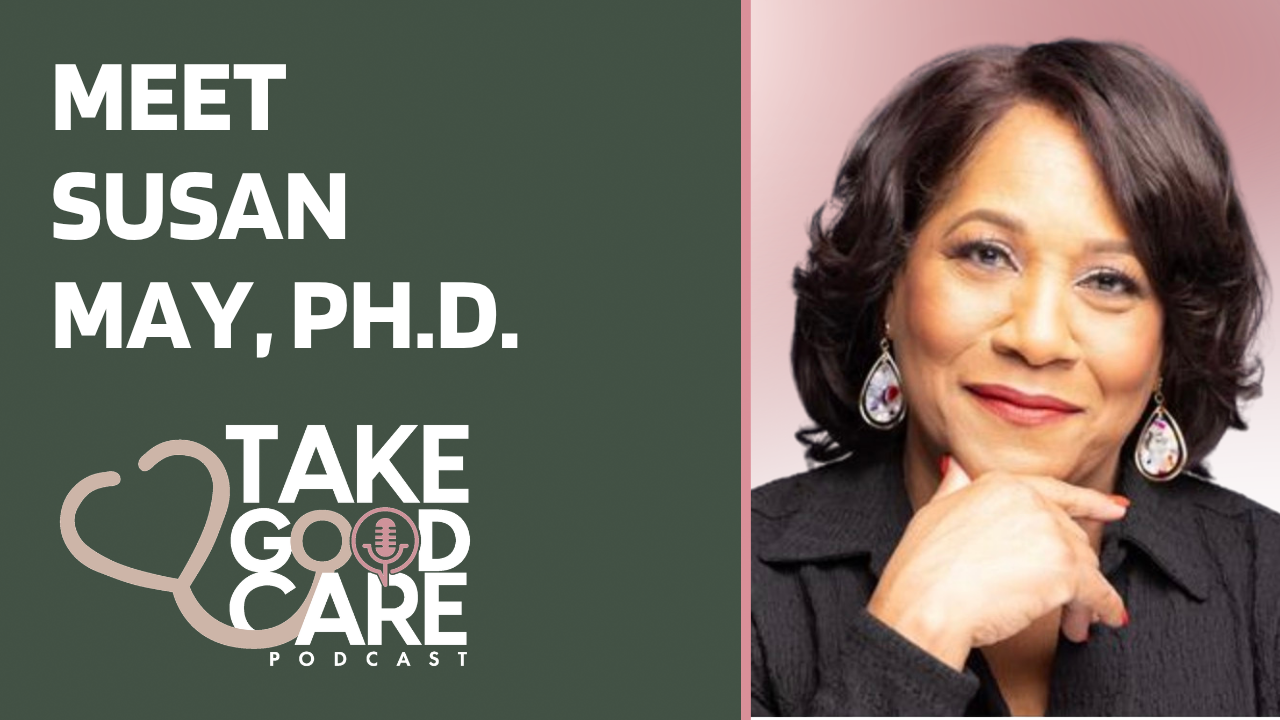

Meet Susan May, Ph.D., Part 2
Continuing from Part 1, Dr. Susan May returns to go deeper into how unrecognized grief actually shows up in the body and in daily life. Dr. Williams connects the topic directly to gynecologic practice, describing patients who come in with pelvic pain that has no identifiable physical cause, no infection, no growth, no mass, and asks how clinicians can better recognize when unaddressed emotion may be part of what a patient is experiencing. Dr. May walks through physical cues worth noticing: a sudden heaviness in quiet moments, tightness in the chest, welling eyes, restlessness, and explains that something as simple as a gentle, unhurried question, “anything else you want to talk about?”, can open a door patients haven’t been given elsewhere.
Much of the conversation focuses on practical tools rather than theory. Dr. May distinguishes between naming an emotion (“I’m angry”) and naming the actual experience behind it (“I really thought I was going to make the team”), arguing that a richer emotional vocabulary, disappointed, frustrated, rather than just mad or sad, helps people actually process rather than misplace what they’re feeling. She also shares accessible mindfulness practices for a life that rarely allows quiet: noticing small sensory details at a red light, sitting in silence during a commute, or pausing with real eye contact rather than reaching for a phone.
The physicians turn the conversation on themselves, sharing the story of their own decision, made after months of unrecognized stress, to stop delivering obstetrics and eventually move to a four-day workweek. Dr. May reflects that the decision likely came from listening to discomfort they hadn’t yet named, and notes that what helped most wasn’t someone jumping in with solutions, but being met and given space to sit with what they were feeling first.
The episode closes on the stigma still attached to counseling, with Dr. May drawing a comparison to preventive physical health: just as an annual wellness exam doesn’t mean something is wrong, she suggests normalizing a similar checkup for mental health, a space for reflection before a crisis, not only after one. Dr. May can be reached through A New Start Counseling Center in Fayetteville, Georgia, or on Instagram at @journeywithdrmay.
Transcript:
Dr. Mironda Williams: Welcome to Take Good Care Podcast. An endeavor that grew out of our love for obstetrics and gynecology. Our aim and mission is to serve as a source of vital information for women of all races, ages, and walks in life. I am Dr. Mironda Williams.
Dr. Deanna Guthrie: I am Dr. Deanna Guthrie.
Dr. Karen Greene: And I am Dr. Karen Greene.
All: Welcome to our show.
Dr. Mironda Williams: Welcome to another episode of Take Good Care Podcast. I’m Dr. Mironda Williams.
Dr. Deanna Guthrie: I’m Dr. Deanna Guthrie.
Dr. Karen Greene: And I am Dr. Karen Greene.
Dr. Mironda Williams: And before I get too excited to continue the conversation with our great guests, let me remind everyone that we are live and on the air and we are back with our wonderful guest, Dr. Susan May, that hopefully you all listen to the first installment of this podcast series with Dr. May. And I’m going to have her to reintroduce herself here in just a second.
But we’re picking back up on a conversation that we started with her where we’re really starting to delve into this whole topic of the losses that we carry in silence, understanding unrecognized grief in women. And so we really want to kind of get into this a little more deeply now, but before we do, can you just please remind our guests again who you are, where your practice is located, how long you’ve been in practice, and then we’ll get back into our conversation.
Dr. Susan Hughes May: Okay. Again, I’m Dr. Susan Hughes May. I’m a clinical psychologist licensed for 30 years practicing here at a A New Start Counseling Center. And available to do a whole bunch of things cross country in the mental health arena and just love that opportunity.
Dr. Mironda Williams: Thank you so much. It’s been exciting. So when we left off before with our thoughtful conversation, we were really starting to get into some discussion about unrecognized forms of loss that women carry. And you were beginning to give us some examples of some things that may start to show up physically or just emotionally that women may not recognize as grief.
And it reminded me of patients that we often may see in our practice who come in with pelvic pain. And they will have pelvic pain that we cannot find any physical reason for, meaning there’s not an infection, there’s not a growth, there’s not a mass. And they’re all like, “But no, something’s not right. Something’s wrong. I don’t feel right. I’m having pain.” So talk to us a little bit more about how you see and how we can even be better as clinicians recognizing those that unrecognized grief that may be displaying itself in other ways.
Dr. Susan Hughes May: It is difficult. Obviously even in our field when people come in with any type of somatic complaint, we’re always first sending them to the physician, right? Rule out anything. But very often if you ask somebody when they sit in the quiet of their day, prior to falling asleep, when you’re in the car and the kids have gotten out, what do you notice? And people will often describe a heaviness come, right? When the noise stops, when the activity stops, “All of a sudden I’m feeling a heaviness,” right? Or they talk about sometimes the tightness in the chest or, “I don’t know, I just feel something’s off.”
So as a physician, I think a lot of times it’s not just asking about the physical symptoms, but being able to even put language like sometimes when we’re tense, when we have weight emotionally that’s on our shoulders, we sometimes feel it in different places, right? And we just set the stage for that. And once you open the door to the idea that maybe some of what you’re feeling may be heart pain and I don’t mean cardiac obviously, right? But emotional, usually what you’ll notice first is the eyes. People’s eyes either begin to well a little bit with tears or you notice just a shift. It’s hard to explain. There’s emotion. Shoulders may go down, right? Oh, deep sighs, restlessness comes all of a sudden.
Sometimes those type of signs are indicators that there’s something more going on. And so often if we just change our tone, we just say, “Hey, anything else that you might want to talk about that you haven’t talked about lately?” And sometimes just a gentle question like that, you’ll be surprised and all of a sudden, “Well, actually…” Right?
Dr. Mironda Williams: Right.
Dr. Susan Hughes May: Because people don’t realize that when we’re holding these things in and holding them back, again, they’re there. And so we just are really needing to give any opening that begins to let it have some expression and some release. And so it’s being attentive, noticing those little details and that often give you a cue.
Dr. Mironda Williams: That’s good because as physicians and then just being human, being a friend, a sister, whatever in today’s world we’ve had conversations about everybody’s holding on to something. Even when we’re seeing patients, everything is electronic. And so I think just in our normal interactions with other individuals and even in our clinical practice we really have to be careful not to lose the awareness of the nonverbal cues.
Dr. Susan Hughes May: Absolutely. Yes.
Dr. Mironda Williams: We can’t always look at the screen because we need to be looking at the patient or your friend or your sister.
Dr. Susan Hughes May: I think it’s true. I mean, I think it’s true both and again, for physicians and even in our field we’re going more, people are typing and trying to take your notes. And yeah the human contact, the observation, listening keenly. Because if the person is holding back and hiding these emotional truths from self, then you know there are barriers too, right? That it’s not easy to just peep it out. And so if you’re distracted as a provider.
And so you’re going to be busy with notes and that kind of thing, but perhaps keeping in mind towards the end of an appointment that there’s this pause, there’s an intentional pause to do the thing like what I was just describing, right? Just to pause and hold that gaze just a little bit longer. Because when you look at somebody deeply in their eyes, it’s a whole different experience-
Dr. Mironda Williams: True.
Dr. Susan Hughes May: … when I’m doing that. I see you.
Dr. Mironda Williams: I see you.
Dr. Susan Hughes May: I’m curious. I want to know.
Dr. Mironda Williams: Right.
Dr. Susan Hughes May: Right.
Dr. Mironda Williams: And we talk about giving permission and creating that safe space for either ourselves as individuals to be able to express our own emotional state, whatever that is, good and bad. I think it’s not always just allowing space for when you’re processing the hard emotions, the grief, the pain, anxiety, even the joy. I think we don’t … And that’s what I wanted. We were talking about this at the last conversation about how we can short circuit the natural system of things when we don’t allow emotions to have their expression. Talk about that a little bit more because I found that very intriguing.
Dr. Karen Greene: The divine design. I wanted to hear more about that.
Dr. Susan Hughes May: Well, I think of the divine design again, being a child who left the United States traveling to India and learning about reincarnation when I was first learning about resurrection and things like that. But I talk about that just because what I’ve been fascinated about since I was a child and observing as much as we’re different as people, whether it’s culture, race, whatever it is, was really the commonality, right? What is it about the human operating system that is anywhere you go, that’s just true, that’s fascinated me for many years. And so again, just because of my own orientation, I do consider it the divine design, right? What this human operating system is.
Dr. Karen Greene: Because we’re more alike than we are different. We really are.
Dr. Susan Hughes May: We’re more alike. And remembering we’re a species that has somehow evolved and that’s not by mistake. It’s because of many aspects of this divine design, much of which my theory is we don’t even understand. We don’t get it. We study our system by our professional interests.
Dr. Mironda Williams: Correct.
Dr. Susan Hughes May: But we don’t really raise our children or really take the time to say, “Wait, what is this thing called? Why is this?” And so the emotional system and some of this is just my own belief and a lot of it is backed in terms of research, but again, why would we have several, how many different ways to convey emotion, right? My tone, avoids, my facial expression, the look in my eyes, all these different ways. That’s not by mistake. It’s because emotional expression, connection, processing is an essential part of being able to effectively operate as a human being.
And so when I say that, I try to tell my clients it’s like our thoughts and emotions are like salt and pepper, even though I know salt ain’t supposed to be as good for us, but you get the general idea. Or your map and your compass is probably a better analogy. And so there’s data in our emotions. We read and understand the world from the factual information we can get, but also the intuitive, the spiritual, the emotional realm. And so, if I’m cutting off that part, I’m cutting off important data.
Dr. Mironda Williams: Right.
Dr. Susan Hughes May: Right? It’s not unlike for you guys, I say you guys, but when a fever indicates that there’s another problem, we need the fever. It doesn’t feel good. And the same is true for uncomfortable emotions. We’re so busy, we’re going through our business, handling our executive functioning tasks, and then all of a sudden the young people say, “I feel some kind of way. All of a sudden I felt some kind of way.”
And usually when we feel an uncomfortable feeling, we’re either conditioned to think, you don’t want to lean into that, you choose, you manifest that which you pay attention to. We hear those kinds of things, right? We compartmentalize. Why do I want to go back to something painful that’s not logical? But really, what we’re wanting to do is lean in with curiosity and respect with our intellect, lean in. If I’m feeling that anger. Wait, okay, I trust. If tears start to come for me, oh, Lord, I let them… I know there’s something going on. Tears are truth, right?
Dr. Mironda Williams: Tears are truth.
Dr. Susan Hughes May: And so I’m going to pause and I’m going to lean in. So when I put my intellectual thought to what is this anger about, what’s the injustice? What’s the boundary that’s been crossed? It gives me the opportunity to identify it and to do what? I can now either get the assistance I need, I can address it, I can make amends, I can pivot. It’s what allows us to assess and make tough decisions that allow us to evolve, right? So the emotional system’s key.
Dr. Mironda Williams: And when you say, “Naming experiences,” and how that creates space for clarity, connection and healing, what are examples when you say name it like anger, sadness, I mean-
Dr. Susan Hughes May: Those are naming the emotions, but I’m talking about often the actual experiences we have go unrecognized. And so it would even be the type of thing as saying out loud, “Dang, all that extra practice I was doing, I really thought I was going to make the team. I really thought I was going to make the team.”
Dr. Karen Greene: Instead of just saying, “Okay.”
Dr. Mironda Williams: Or ignoring it.
Dr. Karen Greene: Or just saying, “It’s okay. It’s okay.”
Dr. Susan Hughes May: Or even ignoring or even feeling mad and, “That was not fair. I’m better than… ” Wherever it goes, looking and you know. But if I sit still and I’m able to just notice what’s going on in me and name what’s going on, what’s going on is darn. I put in a lot of effort. I had an expected outcome. I’m profoundly disappointed. This sucks.
Dr. Deanna Guthrie: Yeah, that’s good. That’s helpful.
Dr. Susan Hughes May: And so I’ve named it. I framed what’s going on.
Dr. Deanna Guthrie: What’s going on.
Dr. Susan Hughes May: So it can’t operate in that silent yet powerful way in the backdrop that influences what I feel, my core beliefs, things that we don’t address and deal with. One of the biggest areas I’m now working in, both in the practice and I also didn’t mention I have Journey’s Way Coaching and Consulting. So I have my LLC that I do the work that’s non-therapeutic through, but the generational family generational legacies and understanding that when I meet a client today who may be dealing with some trauma that we’re usually looking at a family that has six or seven generations of trauma not addressed. That patterns transfer across generations.
And it very powerfully does, we think, “Oh, I know I’m not going to repeat those things that I know were problematic with my parents or the grandparents.” And so we choose to not repeat that, but we also don’t talk about it.
Dr. Mironda Williams: Oh, hell.
Dr. Susan Hughes May: We don’t talk about the legacy of it. Right? And we don’t understand that really those really are the things that are influencing how I feel about myself, how much I trust the world around me. You know what I mean?
All: Mm-hmm.
Dr. Susan Hughes May: And so again, silence has even a generational impact and so I’ve become just more fascinated with trying to do intensive work across generations because you can really have the ripple effect of that, right?
Dr. Mironda Williams: I want to go back to when you were that that whole sitting quietly because-
Dr. Deanna Guthrie: I was going to do that too.
Dr. Mironda Williams: … in this day and time, no one, I mean there’s no space for that. You’re constantly bombarded with information, people are on their phones. So people aren’t, like I said, even when you’re talking about sitting in a car, there’s nobody sitting in a car without music blaring-
Dr. Susan Hughes May: Typically.
Dr. Mironda Williams: … or doing whatever. What are some, I don’t know, exercises or things that can help someone to tap into that sitting quietly?
Dr. Susan Hughes May: Yeah, most of us have difficulty sitting quietly, like you just described. It’s not a conditioned response anymore, right? There used to be a lot of experiences that we would have to be able to do it. We hear of the concept of mindfulness. It’s a term used a lot. And when I first heard the term and the definition, even as a psychologist, I was like, “What the heck is that? That’s some hokey stuff.” The definition sounds so weird.
But really it is so powerfully true that to be able to quiet one’s mind. I remember my practice used to be in Midtown Atlanta when my kids were quite young. And I’d be trying to go from Midtown out here to Fayette County. And my poor children would be the last kids in the afterschool program. You know what I mean?
Dr. Mironda Williams: Mm-hmm.
Dr. Susan Hughes May: You come with mommy guilt, you’re looking down that long hallway. But anyway, so those drives used to be terribly stressful, the red light, the coupon lady at the grocery store, everything was just … And I realized quite a while ago that taking mindful moments, I knew I was dealing with very stressful work. I knew trying to juggle a practice, a marriage and children and I wanted to live. I wanted to make it for the long term. You know what I mean?
Dr. Mironda Williams: Right, right.
Dr. Susan Hughes May: And so I realized that those moments that were stressful, I need to turn them into mindful moments. And so if I’m stuck at a red light, intentionally looking out of the window and noticing how many color greens I see in the leaves or noticing how robustly the wind is blowing. If I’m in the grocery store, taking a moment.
I’ve even had times where I intentionally look in the eyes of the cashier, I know this sounds a little weird. The cashiers are usually the, “How you doing?” And I just hold the… And I just purposely look for a minute. And when they look back at me, I just say, “Thank you so much for your efficiency.”
Now, I know that may sound like it’s not quieting myself, but it is. Sometimes it’s taking a moment just to notice. So in that case, I’m noticing this individual, who nobody’s really seeing. And in that moment I am not in the loop of all my ish, right? I am just present for a moment.
So anyway, breathing strategies, trying to just let yourself close your eyes for a moment, right? Even when we talk about, you were talking about naming, when we think about how important it is, where I wanted to say is naming what I’m experiencing is one thing, but the other part is really allowing space for reflection.
And that we just don’t do. And so if we teach and help people really understand how crucial it is, because the reflection space is whether that’s me talking out loud to somebody, whether it is me being prayerful or meditating or writing, again, we are processing beings. We have to allow there to be this space, right? And so quieting oneself just with the knowledge that let me be still.
Dr. Deanna Guthrie: What about talking to yourself? Is that okay?
Dr. Susan Hughes May: I happen to be talking to you.
Dr. Deanna Guthrie: I was about to say.
Dr. Karen Greene: I don’t know about you.
Dr. Mironda Williams: I talk to myself.
Dr. Deanna Guthrie: The rest of all these…
Dr. Susan Hughes May: I have some robust conversations.
Dr. Deanna Guthrie: Yes.
Dr. Mironda Williams: Yes, I do.
Dr. Susan Hughes May: Even quite humorous at times.
Dr. Mironda Williams: I prop myself up all the time.
Dr. Susan Hughes May: Yeah, yeah. Definitely.
Dr. Mironda Williams: But this has been so helpful to me because when we talk about mindfulness and Karen is really good, Dr. Greene, because she has cultivated a practice of meditation and just really carving out space for her to do that. And I applaud her because I hadn’t gotten there yet, but I’m trying. But hearing what you say puts it in bite-sized bits. You know what I’m saying?
Dr. Susan Hughes May: Yes.
Dr. Mironda Williams: So that I can say, “Oh, I can just acknowledge the air, there’s a breeze going across my face.”
Dr. Susan Hughes May: It’s key.
Dr. Mironda Williams: That helped me say, “Oh, I can create these mindful spaces.”
Dr. Susan Hughes May: 100%. 100%. Mindful moments. Each time it’s a mini reset. And the more I can do mini resets, mini resets, mini resets.
Dr. Karen Greene: And it also keeps us off of our devices.
Dr. Mironda Williams: It keeps you. Yes.
Dr. Karen Greene: Just like you said, if you’re in the line at the grocery store. And I’m culprit, you look at your phone, you’re at a stoplight. You look at your phone. You do things as opposed to just stopping.
Dr. Mironda Williams: Stopping.
Dr. Karen Greene: It’s a stoplight. Stop.
Dr. Susan Hughes May: It’s a stop, stop. Yes. In fact, a lot of times, sometimes you reminded me that sometimes signals help people sit still.
Dr. Karen Greene: Yes.
Dr. Susan Hughes May: So you may have to decide ahead of time, anytime I hear the clock chime, I’m going to sit still for two minutes, right? You get what I mean?
Dr. Karen Greene: Right.
Dr. Susan Hughes May: But something that’s an external cue, but that you become obedient to, you make it a habit. And before you know it, you’ll start to yearn for it.
Dr. Karen Greene: I’ve often told my patients because sometimes they’re waiting a little long in the waiting … But what happens is they’ll pick up their phone and so I’ll say, “Now is this the only quiet time you had today? Why don’t you appreciate it and not get on the phone?” And they’ll say, “Oh, you’re probably right.” Because like you said, we don’t give ourselves permission to stop and just sit. And you figure you have to multitask and get things done at every little waking hour instead of just appreciating, “It’s actually kind of quiet in here. There’s no one asking me for anything. I don’t need to go anywhere. I have no clothes on so I can’t go anywhere. So I might as well just enjoy the peace.”
Dr. Susan Hughes May: I may as well enjoy the peace.
Dr. Deanna Guthrie: I have a long drive to and from work. So sometimes I don’t listen to anything. I just drive in silence.
Dr. Susan Hughes May: That’s a beautiful thing. I understand that.
Dr. Deanna Guthrie: And I try to do that to help.
Dr. Susan Hughes May: It’s important. It’s important.
Dr. Mironda Williams: Yeah, this is so good. I think we’re all having our own little mindful.
Dr. Deanna Guthrie: My little therapy session.
Dr. Mironda Williams: Our group therapy session with Dr. May.
Dr. Deanna Guthrie: Oh, god.
Dr. Mironda Williams: So this has been amazing. And I know we framed the previous conversation we had Dr. May with the last episode and with this one about the losses we carry in silence and how we need to understand these unrecognized grief or just the unrecognized states that we may find ourselves in emotionally. Because when you… Again, me being scientists, when I first heard about, okay, we need to name it, my mind went to, okay, so what are the different names? You know what I’m saying? These questions. Those questions.
Dr. Deanna Guthrie: Have them memorized.
Dr. Mironda Williams: So I was just like, okay, wait, wait, wait. And then you’re like, “No, no, no.” I mean, you can say I feel angry, but the real issue is I thought I was going to make the team. You know what I’m saying?
Dr. Susan Hughes May: Yeah.
Dr. Mironda Williams: So I’m like, yes, we’ve got to get back to understanding that we are full beings emotionally. We get angry about things. We’re not just angry. Something caused us to be angry.
Dr. Susan Hughes May: Something caused.
Dr. Mironda Williams: In that example, you did all this work, you know, you thought you were going to be the starter on the team and you’re on the bench, right?
Dr. Susan Hughes May: The other thing I wonder if I could add to that-
Dr. Mironda Williams: Absolutely.
Dr. Susan Hughes May: … is that a lot of times really improving our emotional vocabulary is very important. I find a lot of young people, but not just young people, but people are able … I feel bad, I feel upset, I’m mad, I’m sad. Most likely that person not making that team felt other emotions more than anger. They felt profoundly disappointed. They felt extremely frustrated. Man, I thought that that effort, the way I was doing that would reach my goal and it hasn’t. What’s going on?
Anger is usually misplaced in situations like that because anger when appropriately manifesting … I don’t mean to say appropriate, but there’s an offense. There’s wrongdoing. How dare you, right? Then my activation and feeling like I need to do something about this makes sense if there’s an injustice, if there’s a boundary that’s been crossed.
But if I’m angry because somebody else’s effort led them to get the spot and I didn’t, I’m going to have that same energy in dealing, but it really wouldn’t be appropriate. But if I’m able to say, “Man, this is so frustrating, Coach. It’s my third time I’ve tried out. You told me if I went down there and had that coach, what happened? This is so disappointing. I was so hopeful.” And now I’m able to be present in a way that people see what’s really going on. They’re going to connect with me differently. If I’m just coming in there pissed, I seem like a bad sport. I’m selfish.
Dr. Deanna Guthrie: And I think we’re taking away emotions from… And I think it’s starting from young kids because we’re trying not to trigger them or make them disappointed or every kid gets a trophy. And I understand the concept behind it, but it’s not helping them deal with life.
Dr. Susan Hughes May: Right. And there are ways to give trophies, if you will, that can reinforce a strength that a child, an athlete, a student is demonstrating, right? There are ways to give positive acknowledgement, but not act like everybody’s equal in everything, correct? And yeah, I mean that tendency to want our kids to feel good, to not hurt. Of course I want to protect my kids from pain. Yeah. The job is to get them ready. And life has a heck of a lot of pain.
Dr. Karen Greene: If we don’t model it to them-
Dr. Susan Hughes May: If we don’t model.
Dr. Karen Greene: … then they’re not going to figure it out.
Dr. Susan Hughes May: They can’t. Yeah.
Dr. Deanna Guthrie: Well, and the emotional vocabulary, that’s what struck me is building an emotional vocabulary that is not just, “I’m sad, I’m mad, I’m angry.” I’m disappointed, I’m profoundly disappointed.
Dr. Susan Hughes May: There’s lots of words we can use.
Dr. Deanna Guthrie: I’m extremely frustrated, but we need to get out of this habit of just resorting to the three or four-
Dr. Karen Greene: Basic words.
Dr. Deanna Guthrie: Basic words.
Dr. Susan Hughes May: Basic words. Yeah.
Dr. Deanna Guthrie: Growing our emotional vocabulary-
Dr. Susan Hughes May: Is very important.
Dr. Deanna Guthrie: … is very important. I just hadn’t thought about it.
Dr. Karen Greene: Because you’re right, it’s not just words, it really, it’s a deeper emotion than a little word like mad, bad, angry, happy, sad. We have that capacity to do that. Obviously we’re feeling that disappointment. I worked so hard and I didn’t get it. Or I didn’t get the job. I didn’t get the man. I didn’t get the woman. I mean anything is that disappointment and I feel sad. I feel used. I feel all the words, all these words.
Dr. Susan Hughes May: Yeah.
Dr. Mironda Williams: And you mentioned, I guess journaling, what are some other things sitting, just giving yourself time to figure out, “What the heck?” is I think one of the biggest takeaways I’m going to take away from this particular session is you got to slow down. We’re all on this hamster wheel-
Dr. Susan Hughes May: Hamster wheel. Yeah.
Dr. Mironda Williams: … trying to do all the things for everybody at the same time with excellence. And there are times when you just need to say, “Hey, I need to just take this time for me.” And it’s been, I think difficult for women in general, I think especially in the United States and just in our culture just because we take care of everything for everybody. But I finally gotten to the point where our offices are closed on Fridays and they’ve been closed on Fridays for a long period of time. And thank God that we did that when we did because it really I think gave us the physical space and time in our workday. And then we finally, and I remember we came to the decision to stop working five days a week because we kept saying, “No, because why are we working five days a week?”
Dr. Susan Hughes May: Why are we?
Dr. Mironda Williams: Because it’s expected.
Dr. Susan Hughes May: It’s expected. Yes.
Dr. Mironda Williams: It’s what we’ve always done the way we’ve always done it. So we’re just going to keep doing this. And then finally, thank goodness 10 plus years ago, same thing when we stopped doing OB, we stopped obstetrics 10 years ago.
Dr. Susan Hughes May: Yeah, that was 10 years.
Dr. Mironda Williams: And we were at the time everyone was like, “You can’t do that.” And we were like, “We can’t not do it-
Dr. Susan Hughes May: We must do it.
Dr. Mironda Williams: … because we have to do this.” It wasn’t a financial decision, it wasn’t a business decision. She’s a mom with two kids, married, we have parents, just relationships. We’re like, “We just can’t do it.”
Dr. Susan Hughes May: Exactly.
Dr. Mironda Williams: We cannot do it all-
Dr. Susan Hughes May: Well, and that’s another-
Dr. Mironda Williams: … anymore.
Dr. Susan Hughes May: And how did you know that though? What would accuse internally … No, but bear with what I mean.
Dr. Mironda Williams: Yeah.
Dr. Susan Hughes May: The reason you were able to ultimately make it is probably there was some uncomfortable emotion.
Dr. Mironda Williams: Absolutely.
Dr. Susan Hughes May: … that you experienced in a wide variety of ways that ultimately led you to come to that conversation.
Dr. Mironda Williams: Yes. One of them being, I remember because I was just being a word that we can’t say on there. And so Karen, she came to me one day and she said, “Listen, what is going on?”
Dr. Susan Hughes May: “Is going on?”
Dr. Mironda Williams: And for whatever reason when she said it that day, like you said, I don’t know what she looked at, I was just like, “I’m doing…” I mean, all this stuff came out. And she sitting back there and she’s like, “Okay. Well, how can we help?”
Dr. Susan Hughes May: Yes. Yes.
Dr. Mironda Williams: Then it was just like, I don’t know, like the sky parted. But then that just got me thinking because I was very frustrated. I came to the conclusion a little bit before they did because I’m older than they are. I’m like, “I can’t do this OB anymore.” And so I had started, I was angry. I remember getting in the car, driving to the hospital middle of the night, I am just sobbing and uncontrolled. I’m like, “Okay, this is not right.”
Dr. Susan Hughes May: I understand. Yeah.
Mironda Williams: I couldn’t put words to it per se. I couldn’t really articulate it, but I’m like, “I can’t keep living like this.” So I started looking at, well maybe I’ll do this, maybe do that. And then finally we all started talking and we all was like, “Wait, we can’t do it either.” You know what I mean? And everybody was like-
Dr. Deanna Guthrie: I’ll never forget when we had gotten down, we were doing OB and we were always at two hospitals running back and forth, covering back. And then we finally got down to one hospital and we had even had ER backup. And it was a little breath of air and then they built the new hospital.
Dr. Karen Greene: Uh-oh.
Dr. Deanna Guthrie: And we had to make the decision, are we going to deliver at that hospital? And I will never forget that meeting. So we’re sitting at the table. And it was a logical decision.
Dr. Mironda Williams: It was a business decision.
Dr. Deanna Guthrie: It was a logical business decision, let me put it that way because 50% of our patients came from that area so they’re not going to bypass a brand new pretty hospital over here. And so I remember we voted, “Yes, we’re going to do the deliveries.” I got in my car and I cried all the way home. I have an hour’s drive. And I boohooed. I was like, “Here we are back again to come to the hospital.” And that was like the beginning because it was soon after we started doing deliveries there that everything just started.
Dr. Mironda Williams: We said, “We just can’t do this anymore.” And so thank goodness, I tell folks it was divine intervention because I can’t say that we planned it, but we just knew something had to change. We just knew something had to change.
Dr. Susan Hughes May: I’ve often, I’ve lived in a variety of places across our country from New York to Massachusetts, LA, New Orleans, Baltimore here. I don’t always know where I’m going, but I know when it’s time to leave is one of my mantras, right?
And so paying attention, your nervous system is going to let you know when something is awry. And the challenge is we usually wait. We’re not noticing what the earliest signs are. And we’re so used to forging on and being the type again. I know for myself I have felt that. I’m not only dealing with profound loss, but when you’re helping in a helping profession and you have to be living every minute as you’re trying to help somebody else. And you’re noticing the toll, right? I’m noticing that I’m getting up and this knee is not … I mean things that are really, really odd.
And I can ignore it because, well, that may be due to whatever. And then I pause. And more and more I start slowing down again and say, “Wait a minute.” You know what I mean? What’s my body saying to me? And when you really stop, you’re going to get answers. And that’s where again, that pause is so important.
Dr. Mironda Williams: It’s so important.
Dr. Susan Hughes May: Yeah.
Dr. Mironda Williams: Because when we made that-
Dr. Susan Hughes May: The other thing that … I’m so sorry.
Dr. Mironda Williams: Yes, no, go ahead. No.
Dr. Susan Hughes May: It sounds like it happened when you spoke out loud and they noticed is that they met you where you were, but it didn’t sound like they jumped immediately into solution. Am I right about that?
Dr. Mironda Williams: Mm-hmm.
Dr. Deanna Guthrie: We all had to process.
Dr. Susan Hughes May: Everybody had to process.
Dr. Mironda Williams: Had to process.
Dr. Susan Hughes May: They joined you there and you were able to sit, right?
Dr. Mironda Williams: Right.
Dr. Susan Hughes May: Because a lot of times that’s one of the challenges of a support system.
Dr. Mironda Williams: Right. You want to jump in and do something.
Dr. Susan Hughes May: People either want to jump in and do something or they want to make them feel better, which then minimizes the experience for the person and has them walk away still not feeling quite heard.
Dr. Mironda Williams: Yes.
Dr. Susan Hughes May: So it sounds like you definitely felt seen. And over time you-
Dr. Mironda Williams: Over time. And it was a good change for us that we look back and we often say, ” Why did we do it like that for so long?”
Dr. Susan Hughes May: So long.
Dr. Mironda Williams: Because you just do it because you think that’s what you have to do.
Dr. Susan Hughes May: Yes.
Dr. Deanna Guthrie: Now another question for me is, and people are because of virtual platforms and things like that, counseling is more, is the word acceptable? How can patients see that counseling is a way to go? Meaning there’s a stigma. Does it mean that I’m mentally unstable? Does it mean-
Dr. Susan Hughes May: You’re weak.
Dr. Deanna Guthrie: … that you’re weak, you’re not-
Dr. Mironda Williams: You should be able to figure it out.
Dr. Susan Hughes May: Yeah. I mean my hope is that that’s progressively changing. And I know in our culture I’m certainly seeing a lot more of us and I’m seeing a lot more men`. So I think things are changing. I don’t operate with a medical model personally in my practice even, which is a difficult challenge in this day and age. Treating individuals who might be dealing with depression, anxiety and other things, but not treating the illness per se. And now I want to try to go back to what your actual question was for me. Repeat that question one more time.
Dr. Mironda Williams: So just saying that there’s a stigma with counseling and mental health care.
Dr. Susan Hughes May: Yes.
Dr. Mironda Williams: Though people are more vocal about it now, but what are some of the stigmas that we can overcome or ways to do that?
Dr. Susan Hughes May: I think we really… Right. Just really understanding that you’re talking about just having a safe space, a designated time to take a break. We spend a whole lot of time becoming experts and studying all kinds of things, but not pausing to look within.
And so to me, just the idea of being able to have, again, safe space to quietly reflect. When you talk out loud, it’s just different. I mean, I have clients who it’s not even about what I say. They’re in the middle of talking out loud and as they’re talking, their insights are coming, they’re catching themselves.
And if we don’t have a space to do that where somebody can help facilitate that type of curious self-exploration, self-development, right? And so that’s what to me is so cool about it. It’s not illness. It’s really becoming your best optimal self.
Dr. Karen Greene: Absolutely.
Dr. Susan Hughes May: And we’re not going to be able to do it without knowing thyself.
Dr. Mironda Williams: Right. And I love what you said about that, which is how I think as we talk to not just patients, but just to ourselves and to friends and family and loved ones, is that you’re giving yourself a designated safe space to go where you can explore who you are.
Dr. Susan Hughes May: And that you know you matter. We’re going to arrange time for everything else.
Dr. Deanna Guthrie: People to realize that you’re not treating … People come in thinking, “Oh, she’s going to tell me this and I need to do this and I’m doing this wrong or whatever.” It’s not you treating them, it’s them having the opportunity to discover-
Dr. Susan Hughes May: It’s so important.
Dr. Deanna Guthrie: … things. That’s the difference. It’s not like going to the doctor, “Okay, I have my elbow hurts. They’re going to do an X-ray. They’re going to give me this. They’re going to give me that.” It’s more, like you said, it’s like space to talk it out.
Dr. Susan Hughes May: To talk, to connect the dots, to the puzzle pieces of our life. For me, mysteries of Nancy Drew and Scooby Doo from those days are.
Dr. Deanna Guthrie: Hardy Boys.
Dr. Susan Hughes May: Oh, you’re Hardy Boy. You know what I mean? But the clues, the puzzles to understand the intricacies and to realize that there’s a place that you can go and make yourself the priority. That’s some serious stuff right there.
Dr. Karen Greene: Yes. And so important.
Dr. Deanna Guthrie: Put yourself at the top of the list for a change.
Dr. Susan Hughes May: Yes, definitely. Definitely.
Dr. Mironda Williams: And I can’t even get my words together, which is not usually a problem I have, is just how important this is for all of us to do before you quote, unquote, “have a crisis.” We don’t necessarily have to wait for a crisis and a health crisis, physical health, emotional health to before we start to explore who we are and learn a language and a vocabulary that allows us to express ourselves emotionally. We don’t have to wait for everything to fall out.
Dr. Susan Hughes May: It’s not just that we don’t have to, but we really want to be sure we’re conveying to the next generations that it’s not wise. And in our physical health, we’re much more accustomed to the notion of prevention, right?
Dr. Mironda Williams: Yes.
Dr. Susan Hughes May: I mean, the insurance companies will give you perks to do things that prevent for physical health.
Dr. Mironda Williams: Yes.
Dr. Susan Hughes May: It doesn’t work that way with mental health. They’re only focusing on mental illness, right?
Dr. Mironda Williams: Yes.
Dr. Susan Hughes May: And so for us to recognize that there’s so much we can do in the development … Oops, sorry, guys. The development side of when we’re building children, progressive cities are integrating in the stuff we know about nervous system reaction in kindergarten and preschool classrooms, using singing bowls and helping them to recognize and notice their body reactions, right? So those kids are going to grow up equipped with skills to deal with stress, to deal with anxiety that we’re treating as if it’s a treatment intervention as opposed to a lifestyle-
Dr. Mironda Williams: A lifestyle. Yeah.
Dr. Susan Hughes May: … that we can develop and improve upon over the course of our lives.
Dr. Deanna Guthrie: We had another guest who was in the mental health venue who said that, just like how we have a GYN wellness exam that gets covered every year, that if everyone got the notion that there’s a mental health wellness exam and it could just be that’s the one visit you had every year.
Dr. Susan Hughes May: Every year.
Dr. Deanna Guthrie: And there was nothing going on and you don’t have to go any further. But if there was something going on that then you can choose or elect to then go on further. And if there’s no stigma, it’s not that you had to make this huge decision that, “I need counseling, I need help.” And then now you’re going to do this thing, but if it’s just a part of just your annual checkup, that you can-
Dr. Karen Greene: For sure. For sure.
Dr. Mironda Williams: Which is one of the reasons why we love doing this podcast and being able to approach these kinds of topics and to have these kind of conversations and to have a much broader audience and the patients that we see in our offices to just convey it’s okay, it’s normal, it’s good. It’s a way to be fully human that we’re taking care of all aspects of our lives.
Dr. Susan Hughes May: Sure.
Dr. Mironda Williams: Not just the physical ones, not just the educational ones, that we’ve got to tune in and become more adept at being able to put language and words to all the things that we experience. So once again, before we get ready to wrap up this episode, does anyone else have any other questions or anything else you wanted to hit on? Dr. May, is there anything else you would like to share with the audience just in general before we get ready to wrap up and then again have you to remind everybody of your contact and how they can find you?
Dr. Susan Hughes May: Yeah. I think the only thing that just came to mind for me is that the other benefit of having a counseling opportunity or therapy opportunity, we don’t live in family life like we used to, right? We’re not with our extended family. The other generations are living in other cities or states.
And so historically, I know in my life growing up, being around the table and having grandparents or uncles and aunties, having conversations, there was so much that I would not only hear, but when I would speak up, there was somebody else who would say, “Well.” And they’d either ask a provocative question back or they would frame something differently, put a ring around it that I hadn’t thought about. And I would walk away, gave me some things to think about.
And often that’s a lot of what can happen in a therapy room too. It’s a space where there’s an individual who’s able to hear between the lines, who may ask a question that you’re not going to ask yourself but then triggers a whole nother line of insight. Or the reframing is often what’s most powerful. People have scripts, core beliefs, these stories we tell ourselves and just keep repeating them. And so when somebody’s objective and is hearing you and they reflect back and you hear like, “Well, that’s not really what I meant.” And you say, “Well, I’m wondering if.” And then, “Huh.”
And so a lot of it isn’t really about like the serious crises and the pathology and it’s really about just pausing in this complex world, right? To get grounded and to get centered and to get focused. And of course, calm.
Dr. Mironda Williams: Yes.
Dr. Susan Hughes May: Trying to get some calm up in this world.
Dr. Mironda Williams: Yes. How about that? Much needed, much needed. Oh, this is just …
Dr. Deanna Guthrie: This is [inaudible 00:41:41].
Dr. Mironda Williams: We could go on and on and on and on.
Dr. Karen Greene: Can someone brings some coffee or some cheese?
Dr. Mironda Williams: I know, right. Snacks. We will definitely have to get Dr. May back again for some more additional and thoughtful conversations, but please remind everyone how they can find you-
Dr. Susan Hughes May: Certainly.
Dr. Mironda Williams: … the name of your practice and all the contacts.
Dr. Susan Hughes May: Yes, definitely. A New Start Counseling Center is in Fayetteville, Georgia and newsstartcounseling.com is our website. I can be followed at Journey with Dr. May on Instagram. And at this time my website is under construction, but you can look at me through LinkedIn as well.
Dr. Mironda Williams: Awesome, awesome. And we’re going to have all that information connected to our website and then to the episode when it airs on all of the podcast platforms. So please make sure you check us out at rosagynecology.com. If you missed the first episode with Dr. May, please go back and check that out so you can understand everything that we were continuing to talk about in this episode, rosagynecology.com.
Thank you for sharing us with all your friends and family. Please share these episodes with your friends and family as a way to open conversation and make sure that we’re making safe spaces for all of us to explore our full emotional realm and what we need to be talking about to each other and with each other. So until we get the chance to meet again with the podcast, I’m Dr. Mironda Williams.
Dr. Deanna Guthrie: I’m Dr. Deanna Guthrie.
Dr. Karen Greene: And I am Dr. Karen Greene. Take good care.