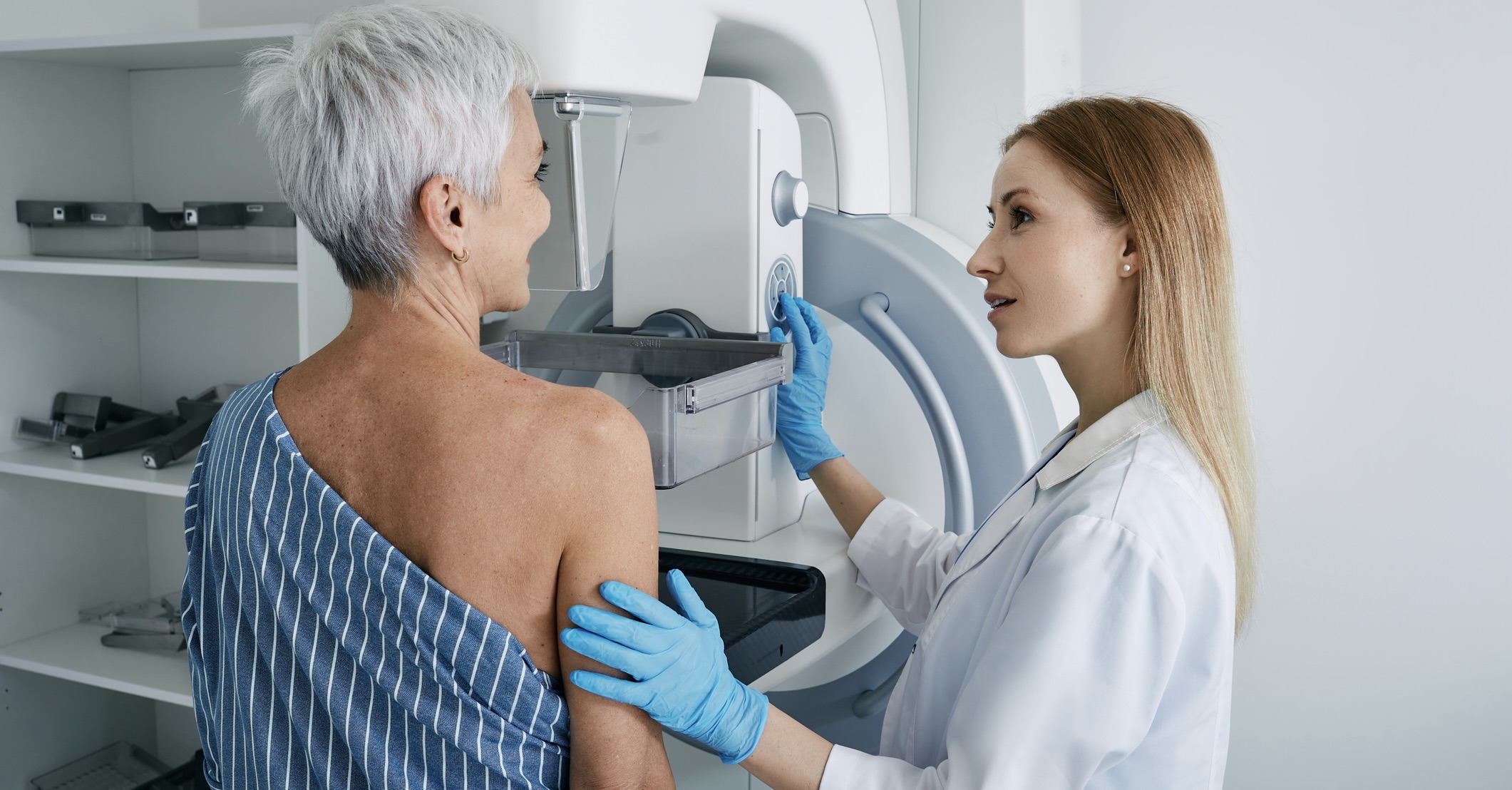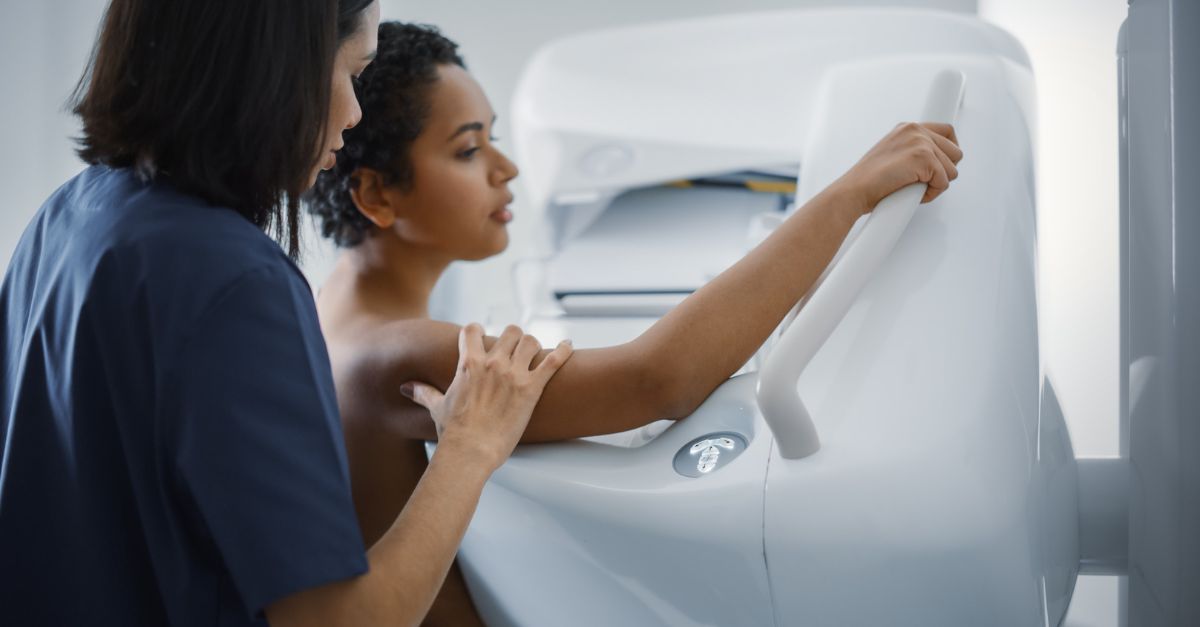
Your mammogram and your annual exam can happen in the same visit, at the same office, with the care team you already know. Rosa Gynecology offers on-site digital mammography with in-house mammographers, so there’s no separate imaging center to schedule, no new provider to explain your history to, and no second trip.
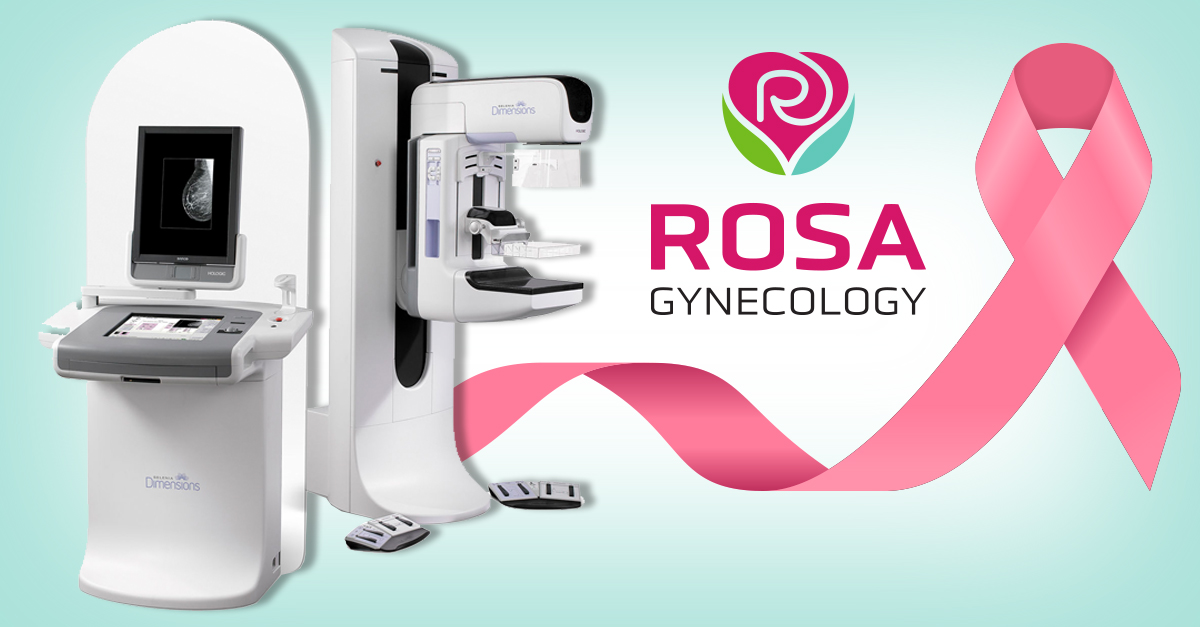
Our Peachtree City location also offers 3D mammography, the newest imaging technology available, in our Sherrie Yaeger Blaha Imaging Suite.
Do You Need a Mammogram?
Most women are advised to begin mammogram screening around age 40, and continue annually after that first screening. If you have a family history of breast cancer, screening may need to start earlier, so it’s worth raising at whatever age your gynecological wellness visits begin. Bring any unusual lumps, changes, or concerns you’ve noticed during a self-exam to your provider’s attention right away, regardless of when your next scheduled mammogram is.
Our Newest Technology: 3D Mammography
A traditional (2D) mammogram takes flat images of each breast. 3D mammography (breast tomosynthesis) takes images from multiple angles and compiles them into thin slices, similar to a CT scan. That extra detail matters most for women with dense breast tissue, where overlapping tissue on a 2D image can hide or mimic abnormalities. 3D imaging is worth asking about if:
- You have been told you have dense breast tissue.
- You have had a callback after a previous mammogram.
- You have a family history of breast cancer.
- You want fewer callbacks, as 3D imaging reduces unnecessary repeat visits by 15% to 30%.
If none of these apply to you, standard digital mammography still follows the same screening guidelines, and 3D imaging remains available at your visit.
Why We Upgraded to 3D Mammography
We upgraded to 3D mammography because too many women, particularly those with dense breast tissue, were being underserved by 2D imaging alone. Since making the switch, we’ve been able to catch findings that weren’t visible on standard 2D mammograms, and to reduce unnecessary callbacks for patients whose tissue simply needed a better first look.
Access matters here too. Women of color and other historically underdiagnosed patients have long faced additional barriers to high-quality breast imaging. Offering 3D mammography on-site, read by board-certified radiologists, is one way we’re working to close that gap for our patients.
What to Expect From a Mammogram Visit
Scheduling
Your mammogram can be scheduled on its own or combined with your annual well-woman exam. Many patients complete both in a single visit.
Timing
Try to avoid scheduling the week before or during your period, when breast tissue tends to be more sensitive.
Insurance
Digital mammography is a standard covered benefit under most plans. 3D mammography is also often covered, though some plans require it to be requested specifically rather than defaulting to 2D. If you’re not sure what your plan covers, our office can help you check before your visit.
Results
Your images are read and reviewed by board-certified radiologists. If you’re called back for additional imaging, that doesn’t necessarily mean something is wrong; it often means your radiologist wants a closer look at one area, which is common and part of how screening is designed to work.
How to Prepare for a Mammogram
Avoid Deodorant. Do not wear deodorant, antiperspirant, powder, or lotions under your arms or on your chest, as aluminum and other ingredients can mimic calcifications on the X-ray.
Time It Right. Try to schedule your exam for the week after your cycle ends, when breast tissue is generally less sensitive and tender.
Wear Two Pieces. Tops paired with pants or a skirt make changing into your gown much easier than wearing a dress.
Bring Prior Records. If your previous mammograms were performed elsewhere, bring or transfer those records so our radiologist can compare them.
Choose the Women Who Know: Schedule Your Next Mammogram with Us
At Rosa Gynecology, your care is led by board-certified physicians—Drs. Mironda Williams, Deanna Guthrie, and Karen Greene—alongside skilled nurse practitioners Mary Corbitt, APRN, and Brittany Bulger, APRN. We’re women too, so we understand firsthand what you’re going through. From our compassionate physicians to our dedicated imaging team, you’ll be cared for by a fully female staff where your personal comfort, privacy, and peace of mind are always paramount. Call us at 770-487-9604 to schedule a 3D digital mammogram or pair it with your next annual exam.